 Soyun
SoyunMedly-SOLAR
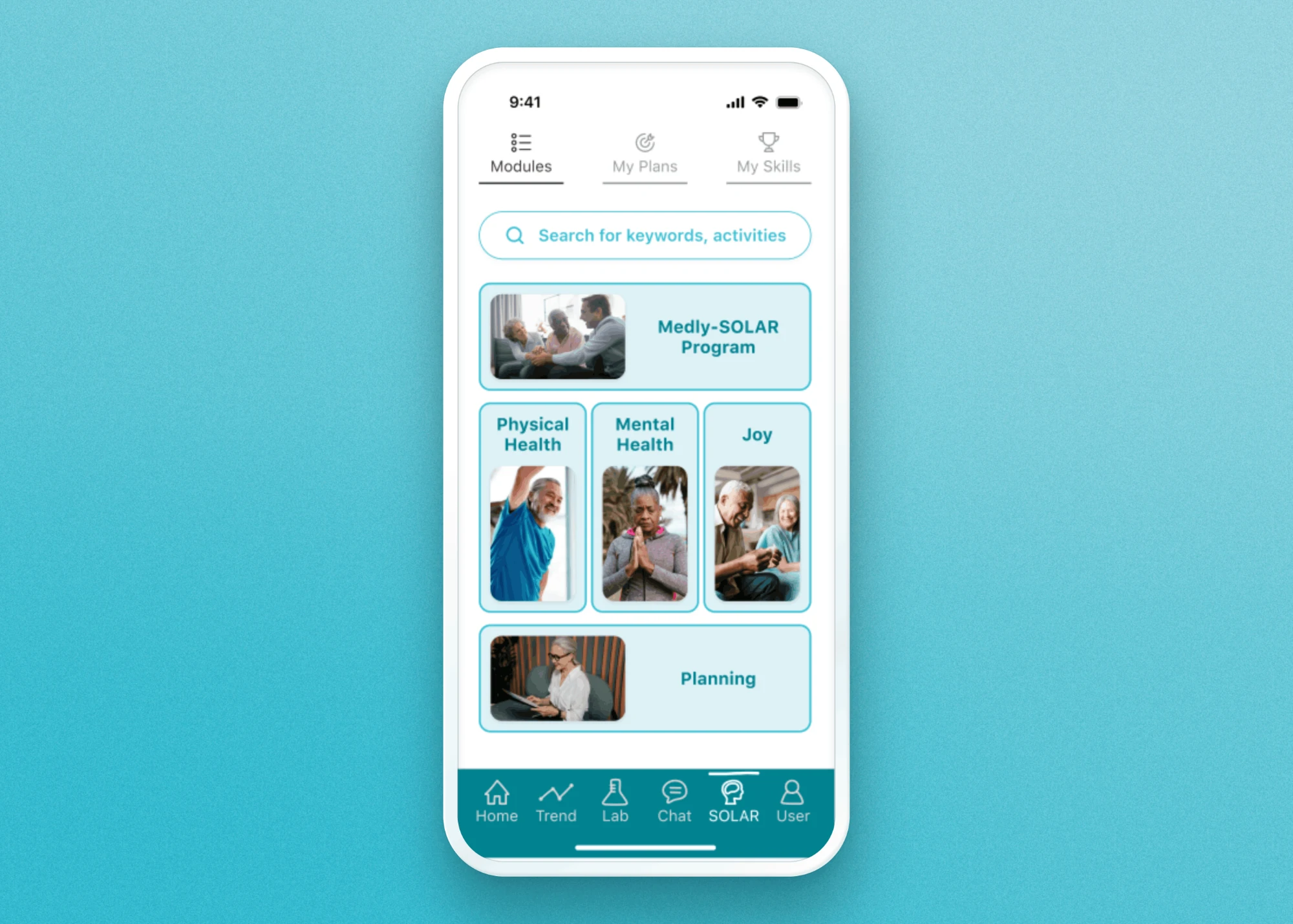
A master's thesis study that adapted the SOLAR mental health program into an app-based intervention for Medly users, designed with heart failure patients and their caregivers.
- Role
- UX researcher & designer (Master's thesis)
- Team
- Medly-SOLAR research team, thesis supervisor and committee
- Timeline
- 2023–2025
- Platform
- Mobile app
The problem
Medly is a remote heart failure management program from the Centre for Digital Therapeutics at University Health Network, built around patient-reported symptom tracking and self-care feedback. Mental health support was a critical gap in heart failure care, for patients and especially for caregivers. The goal was an effective, equitable and user-centered app-based mental health intervention for heart failure dyads: understand their mental health challenges and needs, adapt the evidence-based SOLAR program (Skills fOr Life Adjustment and Resilience) to Medly users, and support an equity-focused design.
Process
I applied a user-centered design approach in four phases: a scoping review of digital health interventions, a needs assessment through 8 user interviews, a co-design workshop with subject matter experts, and mock-up design, review and iterative refinement. The first mock-up followed senior-friendly design principles from Nielsen Norman Group. I then reviewed it with experts and Medly end-users (five patients and three caregivers from the needs assessment) and revised it after every session. Three considerations guided the design: age-friendly and accessible UX with large text, high contrast and intuitive navigation; a balance of flexibility and structure, so people can prioritize the modules most relevant to them while still completing the program; and engagement, tested through gamified progression, celebratory feedback and reminder notifications.
Outcome
Medly-SOLAR expands access to timely psycho-social care within heart failure care, especially for caregivers. Because it was truly designed with heart failure dyads, it is grounded in their lived experiences and priorities, and the collaborative co-design process supports patient- and caregiver-driven care models. It also advances age-friendly digital health design and helps bridge the digital divide. A formal evaluation was beyond the scope of the thesis.